Your Cart (0)

Professional Water Test Kit for Well Water: What the Spin Touch DW Measures
A professional water test kit for well drillers, dealers and installers. What the LaMotte Spin Touch DW measures on site, and what still needs a lab.
by Spectra Services • November 09, 2026
Why pros need more than a strip
Homeowners buy test strips. Water treatment dealers, well drillers and plumbers need numbers they can size equipment from and defend to a customer. A softener sized on a guessed hardness value, or an iron filter installed without knowing whether the iron is ferrous or ferric, is a callback waiting to happen.
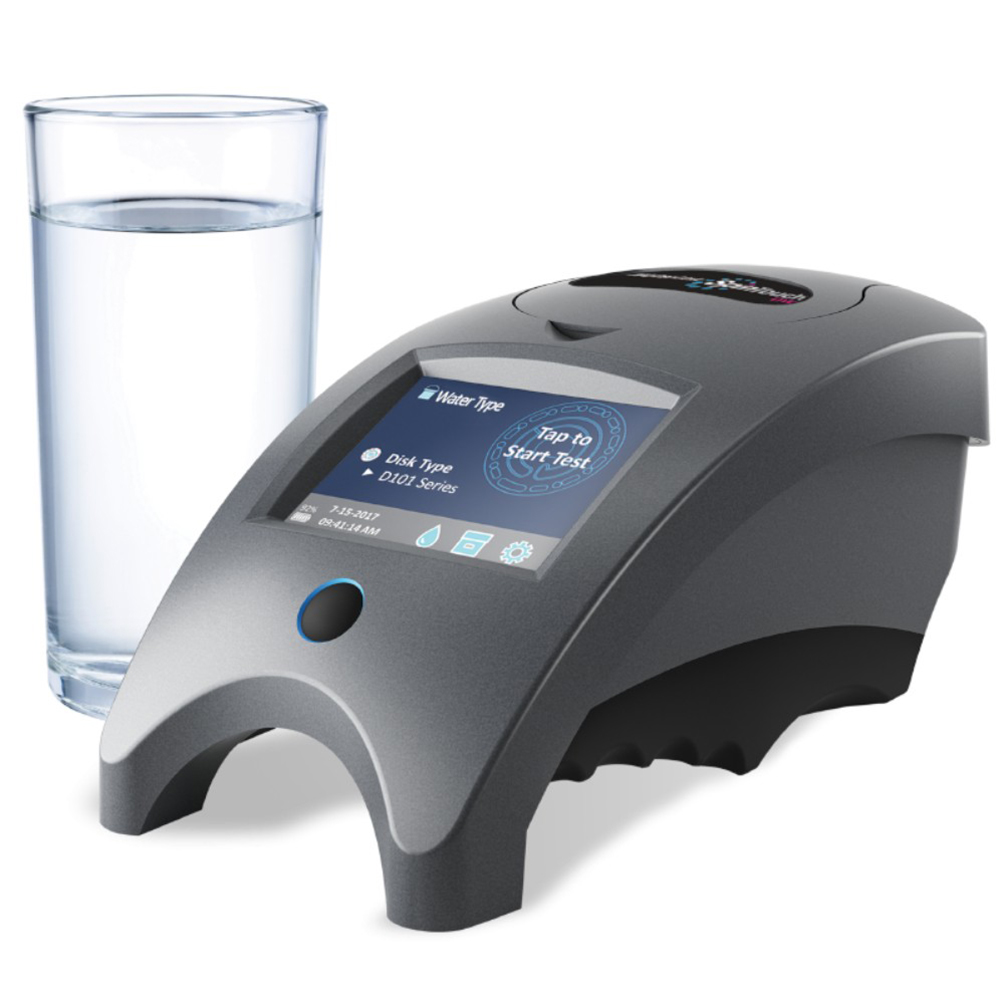
The LaMotte WaterLink Spin Touch DW is built for that job. It is a lab-grade photometer that fits in a carrying case, runs a full panel from one small disk, and prints or emails a report the customer can keep.
What the Spin Touch DW measures
The meter reads single-use SpinDisks. For raw well water, the disk to use is the DW21 Well Water series (4337-H). One disk, filled with less than 3 mL of water, returns nine results in about two minutes:

- pH: 4.5 to 8.6
- Total hardness: 0 to 70 gpg (0 to 1,200 ppm)
- Total iron: 0 to 6 ppm
- Ferric iron: 0 to 6 ppm
- Ferrous iron: 0 to 6 ppm
- Copper: 0 to 6 ppm
- Nitrate (as NO3): 0 to 45 ppm
- Nitrite (as NO2): 0 to 2 ppm
- Total alkalinity: 0 to 250 ppm
The other DW disk, DW13 Treated Water (4336-H), is made for city water: it swaps the nitrogen and iron tests for free, total and combined chlorine. For a private well, DW21 is the disk to use.
Reading the numbers against the standards
Each DW21 result maps to a decision a dealer makes on site. Here is how the main parameters line up with federal guidance.
Hardness
There is no health limit for hardness, but it drives softener sizing. Water above roughly 7 gpg (120 ppm) is usually treated as hard. The DW21 reads up to 70 gpg, so it covers even very hard aquifers without dilution.
Iron, ferrous and ferric
The EPA secondary standard for iron is 0.3 mg/L. Above that, customers see orange staining and taste metal. The split matters for treatment: ferrous (dissolved, clear water) iron can be handled by oxidizing filters or some softeners, while ferric (particulate, red water) iron needs filtration. DW21 reports total, ferric and ferrous iron from the same disk.
Nitrate and nitrite
These are health parameters. The EPA maximum contaminant level is 10 mg/L for nitrate as nitrogen, which is about 44 to 45 mg/L as NO3, and 1 mg/L for nitrite as nitrogen. The DW21 nitrate range runs to 45 ppm as NO3, so any result near the top of that range means the well needs confirmation testing at a certified lab and the homeowner needs to know about it, especially if there is an infant in the house.
pH and alkalinity
The EPA secondary range for pH is 6.5 to 8.5. Low pH with low alkalinity points to corrosive water, which shows up as blue-green staining and, in older homes, as a reason to check for lead and copper. Alkalinity tells you how much neutralizer a system will need.
Copper
The EPA action level for copper is 1.3 mg/L. A high copper reading on a well with acidic water usually means the plumbing is the source, not the aquifer.
What the Spin Touch DW does not test
A professional report should say what was not tested as clearly as what was. The CDC recommends that private well owners test at least once a year for total coliform bacteria, nitrates, total dissolved solids and pH. The Spin Touch DW covers nitrates and pH on site. Bacteria testing needs a certified laboratory or a dedicated culture method, and the DW21 disk does not measure total dissolved solids, arsenic, lead, uranium, radon or PFAS. Where a property sits near agriculture, mining or an old fuel tank, recommend a lab panel alongside your on-site results.
That combination is a selling point, not a weakness. Your on-site numbers let you quote the right equipment today. The lab panel protects the homeowner and you.
A field workflow that works
- Run the cold tap for several minutes before the pressure tank, or sample from the well head if you can, so you are not testing water that has sat in the plumbing.
- Fill the DW21 disk to the line with the syringe, close the lid and insert it.
- While the meter runs, walk the customer through what each result means.
- Print the report or email it to the customer over the meter's Bluetooth connection. The meter stores up to 250 results and transfers them over USB.
- If the system is installed the same day, run a second DW21 disk on the treated side before you leave to confirm the equipment is working.
Why dealers choose the Spin Touch DW over drop kits
- Speed. Nine results in about two minutes, against twenty or more minutes of titrations and color matching.
- Consistency. The meter times every reaction and blanks itself, so two technicians get the same answer on the same water.
- Credibility. A printed or emailed report with the date, time and every value carries more weight with a customer than a color card.
- Cost per test. One single-use disk replaces several separate reagent tests.
On-site meter or mail-in lab: what it costs
A homeowner mail-in kit or lab panel ranges from a few dozen dollars for basic tests to several hundred dollars for a full panel, and results take days. A professional meter costs more up front (Spectra currently has the 3585 on sale for $1,161), but after that each test costs one disk, and results arrive while you are still at the kitchen table.
For a dealer testing several homes a week, that speed is the point: you quote the right equipment on the first visit instead of booking a second one.
For well drillers and pump installers
Drillers need a quick read after development and before handing over a new well. The DW21 disk covers hardness, iron, pH, alkalinity and nitrate in one test, which is what most treatment decisions hinge on. Add a bacteria and TDS sample sent to a certified lab, and you have a complete handover report.
Related reading: Which LaMotte Spin Touch disk do I need? Every DW, FX and FF SpinDisk explained
Frequently asked questions
Is the Spin Touch DW a certified lab test?
No. It is a field photometer for screening and equipment sizing. Use a state certified laboratory when you need results for a real estate transaction, a health concern or regulatory reporting.
How often should a well be tested?
The CDC recommends at least once a year for total coliform bacteria, nitrates, total dissolved solids and pH, and again after flooding, a change in taste or odor, or work on the well.
Can the Spin Touch DW test for bacteria?
No. Bacteria need a culture method or a certified lab.
How many tests does a battery charge last?
About 150 tests per charge, enough for several days in the field.
What comes in the box?
Three syringes, a calibration disk, a disk cover, a sample bottle, a USB cord with wall adapter, a cushioned mat, a carrying case and the manuals. SpinDisks are sold separately in boxes of 50.
How can I tell if well water is safe to drink?
Only testing can tell you. The CDC recommends testing private wells at least once a year for total coliform bacteria, nitrates, total dissolved solids and pH. The Spin Touch DW covers nitrate and pH on site; bacteria and TDS need a certified lab.
How much does a well water test cost?
A homeowner mail-in test runs from a few dozen to several hundred dollars depending on the panel. A professional meter like the Spin Touch DW costs more up front, then each test costs one disk.
What equipment do professionals use to test well water?
Most dealers carry a multi-parameter photometer such as the Spin Touch DW for hardness, iron, pH, alkalinity, nitrate and copper, plus sterile bottles for bacteria and TDS samples sent to a certified lab.
Talk to Spectra about a well water tester
Spectra Services supplies water treatment dealers with the Spin Touch DW, DW21 Well Water disks, printers and spare parts, and we can set you up with a standing disk order. Call 585.265.4320 or request a quote online.
overall rating:
my rating:
log in to rate